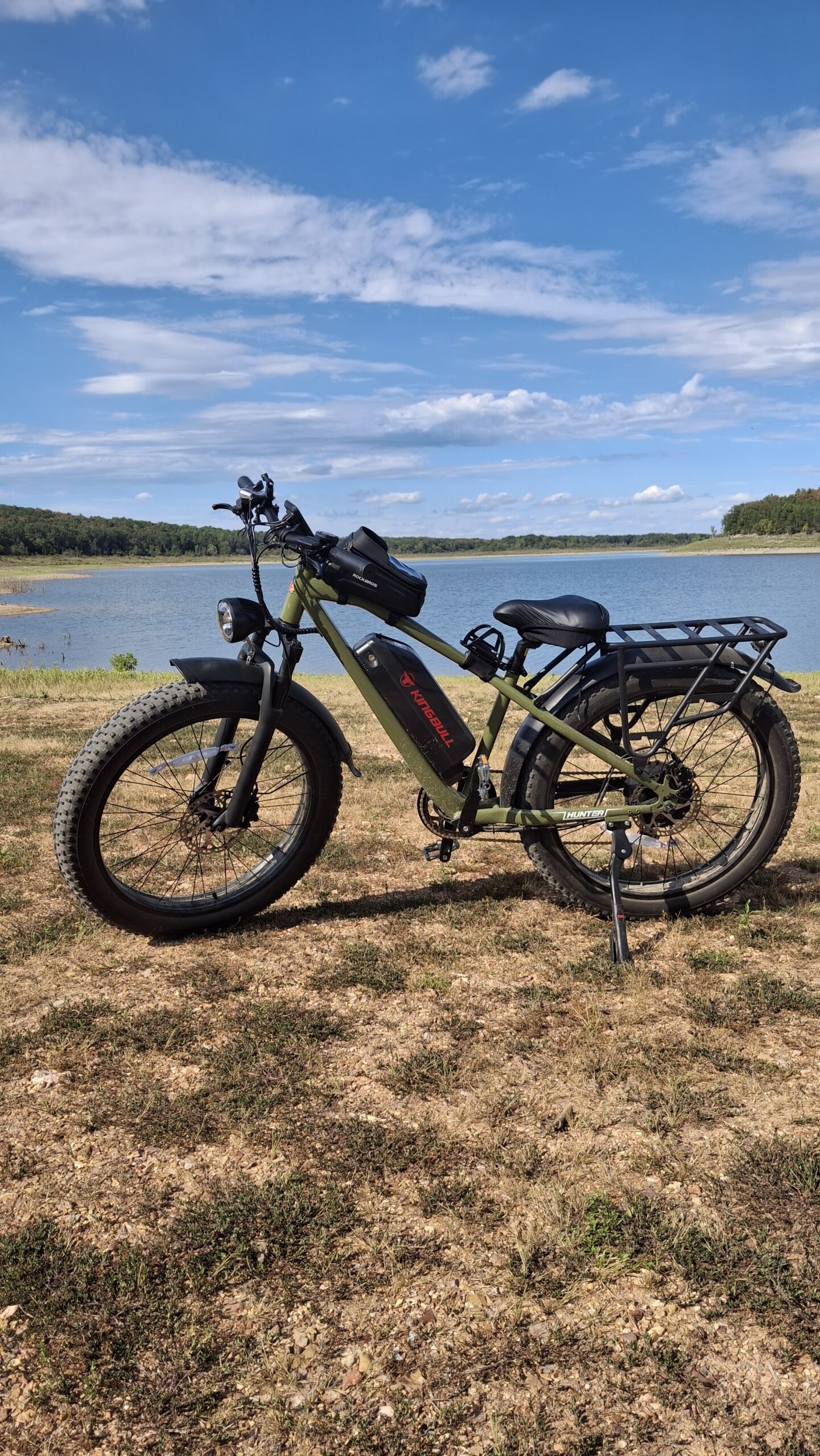
Kingbull Hunter 2.0S E-Bike Review: A Powerful Fat-Tire E-Bike for Backroads and Trails
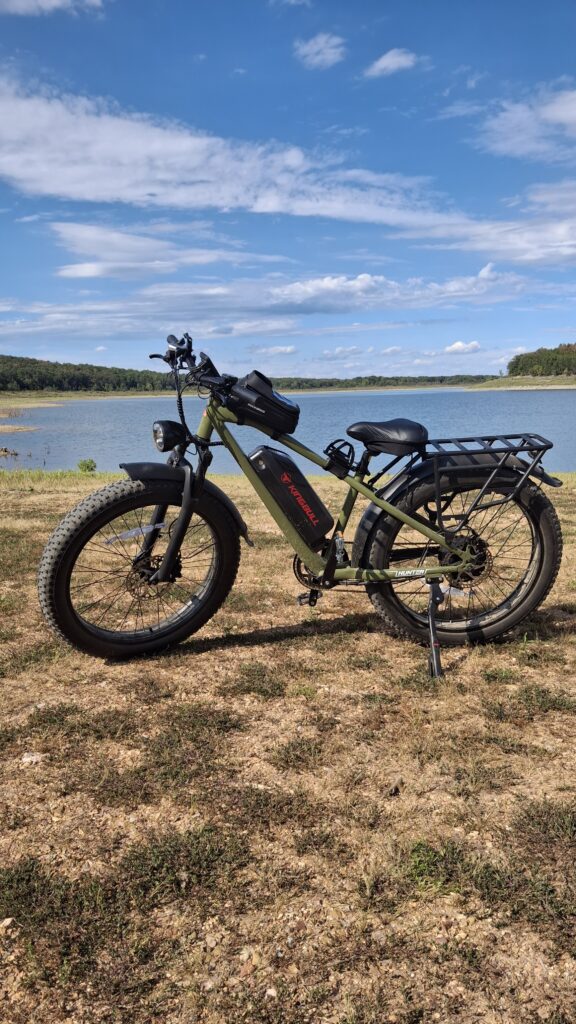
If you decide this is the e-bike for you, purchasing through our direct link helps support us and helps us bring you more content from around the Ozarks.
Kingbull Hunter 2.0S Direct Purchase
If you are looking for an electric bike capable of handling gravel roads, rough trails, hills, and everyday recreational riding, the Kingbull Hunter 2.0S is an exciting option. With a 750-watt rear hub motor, large 26 x 4-inch fat tires, an 864Wh battery, hydraulic disc brakes, and a substantial rear cargo rack, the Hunter 2.0S is designed to be an all-terrain utility e-bike rather than a lightweight commuter.
I purchased the Kingbull Hunter 2.0S primarily for riding gravel roads, trails, and backroads around the Ozarks, including areas around Bull Shoals Lake. After getting the bike assembled and spending some time with it, there are several things I particularly like about the Hunter 2.0S—and a few things prospective buyers should know.
Kingbull Hunter 2.0S Specifications
The current Hunter 2.0S is equipped with a 750-watt brushless rear hub motor that Kingbull rates at up to 1,300 watts of peak power. Kingbull also advertises approximately 85 Nm of torque.
The major specifications include:
- 750W rear hub motor
- Up to 1,300W peak motor output
- 48V 18Ah lithium-ion battery
- 864Wh battery capacity
- Maximum speed of approximately 28 mph
- Advertised range of up to 80 miles under ideal conditions (with pedal assist)
- 26 x 4-inch CST fat tires
- Hydraulic disc brakes
- Shimano 7-speed drivetrain
- Five levels of pedal assist
- Twist throttle
- Cadence pedal-assist sensor
- 4-inch color display
- Front suspension
- Front and rear lighting
- Brake light and turn signals
- Rear cargo rack
- Front and rear fenders
- 400-pound maximum payload
- 150-pound rated rear-rack capacity
- IPX6 water-resistance rating
Kingbull currently lists the bike at approximately 77 pounds, so this is definitely a substantial e-bike rather than something you will regularly carry up a flight of stairs.
First Impressions and Assembly
The Hunter 2.0S arrives mostly assembled, so completing the bike is relatively straightforward for anyone comfortable with basic bicycle assembly. Once you install the front tire, front fender, and handlebars, you are ready to ride after a short time spent setting up the controls. All the setup instructions are included in the assembly manual.
The bike immediately feels substantial. Between the large frame, fat tires, battery, rack, and motor, this does not feel like a conventional mountain bike with an electric motor attached. It feels more like a purpose-built electric utility and recreational bike.
That size can be an advantage when riding rough surfaces. The large tires provide considerable stability on gravel, loose rock, dirt roads, grass, and other surfaces that can make narrower bicycle tires uncomfortable.
There was one significant issue with my particular bike when it arrived. The front hydraulic brake was completely soft and the caliper wasn’t functioning properly even though the brake reservoir contained fluid. That required troubleshooting before the bike could be considered ready for normal riding. I was able to ride until my brake bleed kit arrived. After bleeding the front brake and removing the air from the lines, the brake function was restored.
I would not necessarily assume every Hunter 2.0S will have the same problem, but it is worth mentioning in an owner review. Regardless of brand, buyers should carefully inspect and test both brakes, steering, wheel attachment, tire pressure, drivetrain, and electrical system before taking any mail-order e-bike on its first ride. I only mention this because it may not occur to many first-time buyers that your new bike needs to be set up and adjusted to your riding comfort and style.
Motor Performance
One of the strongest features of the Kingbull Hunter 2.0S is its 750W hub motor.
For the kind of riding I purchased the bike for, outright racing performance isn’t particularly important. What matters more is having enough motor power to deal with hills, gravel roads, uneven terrain, and the additional rolling resistance created by 4-inch-wide tires.
The Hunter 2.0S has plenty of power for that role.
Kingbull rates the motor at 750 watts nominal with up to 1,300 watts peak output and approximately 85 Nm of torque. Those specifications place it firmly in the higher-powered category of recreational fat-tire e-bikes.
The bike uses five levels of pedal assist as well as a twist throttle. That gives the rider considerable control over how much assistance the motor provides.
For longer recreational rides, lower pedal-assist settings are particularly useful because they allow you to contribute meaningful pedal power while preserving battery capacity.
Higher assist settings are there when terrain becomes more demanding.
On level gravel roads I can easily achieve the 28 mph top speed even without pedal assist fairly quickly. The motor may struggle without pedal assist when climbing steep hills. Shifting to a lower gear while pedaling uphill makes the climb less demanding on my 64-year-old knees.
48V 18Ah Battery
One of the most important upgrades on the Hunter 2.0S is its 48-volt, 18Ah battery.
That works out to:
48 volts × 18 amp-hours = 864 watt-hours
An 864Wh battery is substantial for an e-bike in this category.
Kingbull advertises a maximum range of up to 80 miles, but buyers should pay careful attention to the words “up to.” Kingbull itself specifies that this figure is achieved under ideal riding conditions.
Actual range is affected by rider weight, terrain, hills, tire pressure, speed, temperature, wind, cargo load, throttle use, and pedal-assist level.
For someone riding in the Ozarks, terrain can have an especially large effect. Long climbs and repeated elevation changes demand considerably more energy than riding the same distance on level pavement.
For that reason, I consider battery capacity more useful than an advertised maximum-range number. With 864Wh available, the Hunter 2.0S has a relatively large energy reserve for extended recreational rides.
Fat Tires and Off-Road Capability
The Hunter 2.0S uses 26 x 4-inch CST tires.
For riders who spend most of their time on pavement, tires this wide probably aren’t necessary. For gravel roads, Corps of Engineers roads, forest roads, dirt, loose gravel, and rough recreational trails, they make considerably more sense.
The large tire footprint gives the bike a sturdy, planted feeling that helps absorb smaller bumps and rocks before they ever reach the suspension. They provide more traction in loose gravel and handle rocky terrain surprisingly well. This is a major consideration in this part of the Ozarks.
Fat tires also have disadvantages.
They create more rolling resistance than conventional bicycle tires, they’re heavier, and replacement tubes and tires are larger and more expensive than common bicycle sizes.
For this particular bike, however, they fit its intended purpose very well. I think you will definitely appreciate the extra stability they provide in off-road riding.
Hydraulic Disc Brakes
The Hunter 2.0S uses hydraulic disc brakes rather than the mechanical disc brakes commonly found on less expensive e-bikes.
That is an important feature on a bike weighing approximately 77 pounds before adding the rider and cargo.
Hydraulic brakes generally require less hand pressure and provide better modulation than inexpensive mechanical systems. That becomes especially valuable when descending hills or controlling a heavy bicycle on loose surfaces.
As mentioned earlier, my front brake required attention when the bike arrived. Once the braking system is functioning correctly, hydraulic brakes are a feature I would strongly prefer on an e-bike of this size and weight.
Although the rear brake is mainly used in most situations, the front brake is valuable when traveling downhill and when shorter braking distance is required.
Shimano 7-Speed Drivetrain
The Hunter 2.0S uses a relatively basic Shimano seven-speed drivetrain.
It does the job, but this isn’t a premium mountain-bike drivetrain.
That distinction is important.
The Hunter 2.0S should probably be viewed as a fat-tire electric adventure/utility bike rather than a high-end electric mountain bike. Much of the purchase price is going toward the motor, large battery, fat tires, hydraulic brakes, electronics, rack, lights, and other equipment rather than sophisticated conventional bicycle components.
For recreational riders, that tradeoff may make sense. In my case, I believe it does. I have ridden very close to 100 miles off-road so far on this bike, and I haven’t had any problems with the drivetrain at all once I adjusted the chain tension after the first test ride.
Display, Lighting, and Controls
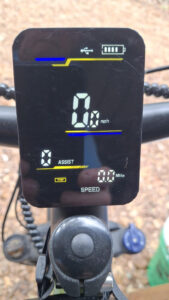
One feature I appreciate is that Kingbull has equipped the Hunter 2.0S as a fairly complete bike rather than requiring the owner to immediately purchase numerous accessories.
The bike includes a large color display, headlight, rear light, brake-light function, turn signals, horn, fenders, and rear rack.
For riders exploring rural roads or spending long periods away from paved bicycle paths, those features can be genuinely useful.
The rear rack is especially notable. Kingbull rates it for as much as 150 pounds, although riders obviously need to remain within the bike’s overall 400-pound payload rating.
It provides plenty of possibilities for carrying tools, camera equipment, food, extra clothing, fishing equipment, or other gear.
Accessories
Although the Kingbull Hunter 2.0S is a complete bike right out of the box, there are a number of accessories I purchased to make riding more enjoyable and a few others to make maintenance and upkeep easier. I have added a few of those recommended accessories below, along with direct Amazon links to each product.
ROCKBROS Aluminum MTB Pedals Wide Platform Flat Pedals with Sealed Bearings – https://amzn.to/4xOJpSC
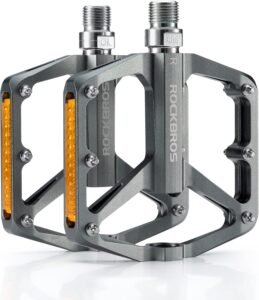
One of the first upgrades I made to the Kingbull Hunter 2.0S was replacing the stock pedals with a set of ROCKBROS Aluminum MTB Wide Platform Flat Pedals. These pedals have a larger platform that provides better foot support and grip, which is especially useful when riding gravel roads, trails, and uneven terrain. The aluminum construction feels considerably more substantial than basic plastic pedals, while the sealed bearings help provide smooth rotation and protection from dirt and moisture. For the type of riding I plan to do with the Hunter 2.0S, they are a simple and relatively inexpensive upgrade that improves both comfort and confidence on the bike. The main reason for replacing the stock pedals was due to an aggressive dog that impacted the pedal while riding and bent the hub.
This brings me to my next suggested accessory.
POM MK3 Pepper Spray, Belt Clip Model – https://amzn.to/4jsaZS9

For personal safety while riding in more remote areas, I also added the POM MK3 Pepper Spray Belt Clip Model to my riding gear. Its compact size and integrated belt clip make it easily accessible without having to carry it in a bag or rack pack. That can be useful when riding rural roads, trails, or isolated areas where encounters with aggressive dogs or other unexpected situations are possible. The POM MK3 is lightweight and easy to carry on your belt, making it a practical addition to an e-bike safety kit. As with any pepper spray product, riders should check applicable state and local laws and become familiar with safe handling before carrying it.
ROCKBROS Bike Phone Bag – https://amzn.to/4ypHp4E
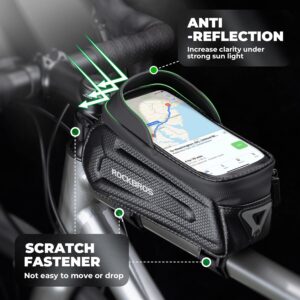
I also added a ROCKBROS Bike Phone Bag to keep my phone accessible while riding without having to carry it in a pocket or rear bag. The bag mounts to the bike frame and provides a secure place for a smartphone, while also offering extra storage for small items such as keys, a wallet, tire tools, or charging cables. For longer rides on gravel roads and trails, having the phone positioned where it is easy to reach is useful for navigation, checking maps, and taking photos without constantly unpacking other gear. The enclosed design also provides some protection from dust, light rain, and trail debris. It also includes a rain cover in case you get caught in a downpour.
Zefal Pulse Universal Water Bottle Bike Cage – https://amzn.to/3Va7mGB
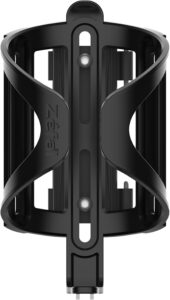
I also added a Zefal Pulse Universal Water Bottle Bike Cage to make it easier to carry water on longer rides. What makes this setup especially useful on an e-bike like the Hunter 2.0S is that it does not require factory-installed bottle-cage mounting bosses. The Zefal Universal Cage Mount attaches directly around a frame tube using a wide silicone-coated hook-and-loop strap and a protective mounting pad, so it can be positioned where it fits best on the bike. The mount accommodates tubes up to 80 mm in diameter. The bottle cage can also be bolted to the bike using standard 64 mm bottle-cage spacing. This makes it a practical solution for larger e-bike frames where conventional bottle-cage mounting points may be limited or unavailable. I chose to use the strap mounting system and haven’t encountered any issues with the holder turning around the tube, even on very rough terrain.
Nextcover CoverPro Bike Seat Cushion –
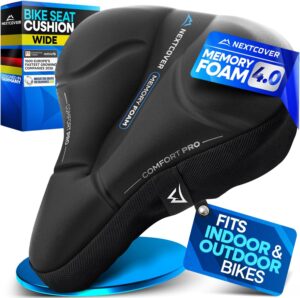
For longer rides, I also added the Nextcover CoverPro Bike Seat Cushion to improve comfort over the stock saddle. The cushion fits over the existing bike seat rather than replacing it, adding an extra layer of padding that can help reduce pressure and vibration on longer gravel-road and trail rides. That is particularly useful on a heavier fat-tire e-bike like the Hunter 2.0S, where extended rides over uneven surfaces can become uncomfortable. It is a simple accessory, but for riders who plan to spend an hour or more in the saddle, added seat cushioning can make a noticeable difference in overall ride comfort.
DuPont Chain-Saver Wax-Based Lubricant Aerosol – https://amzn.to/4hP4OX1

For routine drivetrain maintenance, I also use DuPont Chain-Saver Wax-Based Lubricant Aerosol on the Hunter 2.0S. A wax-based chain lubricant is a good fit for the dusty gravel roads and trail conditions where I expect to ride because it tends to attract less dirt and grit than a heavier, wetter lubricant. Keeping the chain properly lubricated helps reduce friction, noise, and drivetrain wear, especially on a heavy e-bike where the chain can be subjected to higher loads during climbing and acceleration. I like the aerosol application because it is quick and easy to apply, making regular chain maintenance more likely to get done.
ROCKBROS 2PCS Bike Chainstay Protector – https://amzn.to/4y84TKF
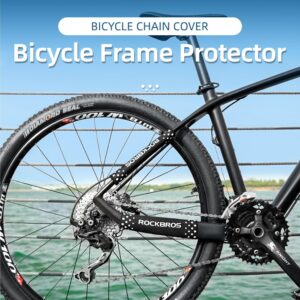
I also added the ROCKBROS 2-piece Bike Chainstay Protector set to help protect the Hunter 2.0S frame from chain slap, scratches, and chipped paint. On rough gravel roads and trails, the chain can move considerably as the rear of the bike bounces over uneven terrain, allowing it to repeatedly strike the chainstay. These protectors wrap around the frame in that high-contact area and provide a sacrificial layer between the chain and the paint. It is a small, inexpensive upgrade, but it can help keep the bike looking better while also reducing the noise that comes from the chain contacting the frame.
Slime 10003 Bike Tube Puncture Repair Sealant – https://amzn.to/3Tx9Ii2

Another accessory I added for peace of mind on longer rides is Slime 10003 Bike Tube Puncture Repair Sealant. The Hunter 2.0S uses large fat tires, and dealing with a flat several miles from the trailhead or vehicle can quickly turn into a major inconvenience. Slime is designed to seal small punctures in the inner tube as they occur, which can help reduce the chances of being stranded by common thorns, small nails, or similar road and trail debris. I consider it inexpensive insurance for an e-bike that will spend a lot of time on gravel roads, trails, and other rough surfaces where punctures are more likely. Since the Kingbull Hunter 2.0 S comes with a manual tire pump from the factory, carrying the sealant with the tire pump can prevent you from being stranded with a flat tire miles from where you started.
Brake Bleed Kit for Shimano, TEKTRO, TRP Hydraulic Disc Brakes – https://amzn.to/4jx0BZg
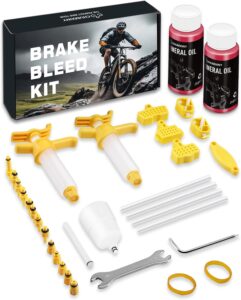
Because the Hunter 2.0S uses hydraulic disc brakes, I also keep a compatible brake bleed kit on hand for routine maintenance and troubleshooting. A bleed kit designed for Shimano, TEKTRO, and TRP hydraulic systems includes the basic tools needed to remove air from the brake lines and replace or service the hydraulic fluid when necessary. This became especially relevant for me because the front brake on my Hunter 2.0S arrived with a completely soft lever and required troubleshooting before the bike was ready to ride. For anyone who plans to maintain their own e-bike, a brake bleed kit can be a worthwhile addition to the workshop, particularly if the bike will see frequent use on hilly gravel roads and trails where dependable braking is essential. Check the brake fluid requirements of your particular bike prior to ordering. This kit is for bikes using mineral oil brake fluid, not car brake fluid.
What I Like About the Kingbull Hunter 2.0S
The biggest strengths of the Hunter 2.0S are its combination of motor power, battery capacity, large tires, hydraulic brakes, and included equipment.
For the type of riding I do, several features stand out:
The 864Wh battery: This provides considerably more usable energy than smaller batteries commonly found on entry-level e-bikes.
750W motor: There is enough power available to make hills and rough terrain much more manageable.
26 x 4-inch fat tires: They are very well suited to gravel and rough backroads.
Hydraulic brakes: Appropriate for a bicycle of this weight and performance.
Rear rack and fenders: Both are included rather than being additional purchases.
Lighting and turn signals: Useful additions for both safety and practicality.
400-pound payload rating: This gives the bike substantial capacity for a rider plus equipment.
What Could Be Better
No e-bike is perfect, and there are several areas where the Hunter 2.0S involves compromises.
Weight: At roughly 77 pounds, this is a heavy bicycle. Transporting it on a vehicle requires an e-bike-rated rack with sufficient capacity.
Cadence sensor: The Hunter 2.0S uses a cadence-based pedal-assist system rather than a torque sensor. A torque sensor can provide a more natural response because assistance changes in proportion to how hard the rider pedals.
Basic seven-speed drivetrain: It is functional but not comparable to the components found on higher-end mountain bikes.
Charging time: Kingbull currently specifies a 2-amp charger. With an 18Ah battery, completely recharging a heavily depleted battery will take several hours.
Initial quality-control issue: My bike’s front brake arrived nonfunctional. That doesn’t establish that the model as a whole has a brake problem, but buyers should perform a thorough inspection before riding.
Who Is the Kingbull Hunter 2.0S Best Suited For?
I think the Hunter 2.0S makes the most sense for someone looking for an e-bike capable of doing several jobs.
It can function as a recreational bike, gravel-road explorer, hunting/fishing transportation, rural utility bike, or general-purpose fat-tire e-bike.
It is especially well suited to riders who expect to encounter a combination of pavement, gravel, dirt roads, hills, and moderately rough terrain.
Someone primarily looking for a lightweight bicycle for paved bike paths or commuting may be better served by a lighter e-bike with narrower tires.
Similarly, riders looking for a true performance-oriented electric mountain bike will probably want a mid-drive motor, torque sensor, more sophisticated drivetrain, and higher-end suspension.
The Hunter 2.0S occupies a different niche.
It is a relatively powerful, heavily equipped fat-tire e-bike designed to cover a wide range of recreational and utility riding.
Final Thoughts on the Kingbull Hunter 2.0S
The Kingbull Hunter 2.0S has a combination of features that makes it particularly interesting and useful for rural riders.
The 750W motor, large 864Wh battery, 26 x 4-inch tires, hydraulic brakes, front suspension, cargo rack, lighting, and 400-pound payload capacity create a bike that is capable of considerably more than cruising around a neighborhood. Its beefy frame, fat tires, and powerful motor are especially suited to backcountry riding on rough trails and gravel roads.
There are compromises. It is heavy at around 77 pounds with the battery installed; the seven-speed drivetrain is fairly basic, and a torque-sensing pedal-assist system would improve the riding experience. My particular bike also arrived with a front-brake problem that needed to be addressed, but it was easily solved with the proper brake bleed system.
The basic platform has a lot going for it. Adding a few comfort accessories makes this e-bike even more comfortable on the rough terrain around Bull Shoals Lake. I’ll also be using it as hunting season rolls around. It is amazingly quiet when riding the established trails on the Lost in the Ozarks property.
For exploring the gravel roads, backroads, and trails around the Ozarks and Bull Shoals Lake, the Hunter 2.0S offers the combination I was looking for: substantial battery capacity, enough motor power for hilly terrain, large tires for rough surfaces, and the ability to carry equipment.